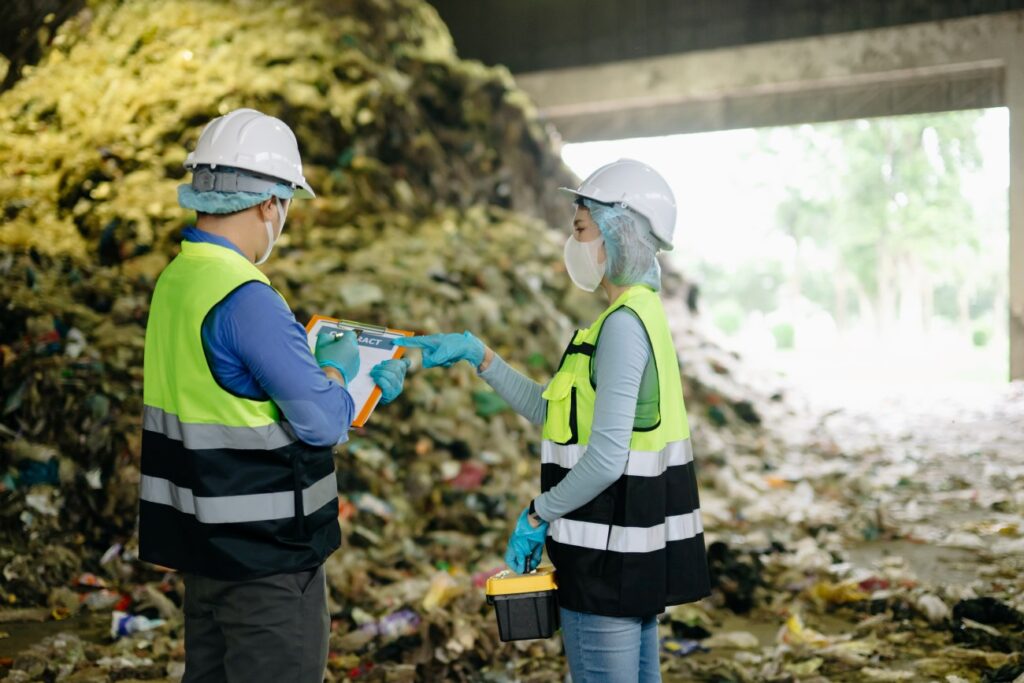
What really stands out when you walk through a plant
Over the years, I’ve learned that a company’s culture isn’t something you read on its walls. You feel it on the plant floor. You see it in whether someone pauses before reaching into a machine, whether a supervisor corrects someone respectfully or looks the other way, and whether an operator like Rosa feels safe enough to say, “This isn’t right,” without worrying that people will judge her or call her difficult.
Those small actions, repeated every day and picked up by others, are the culture. A banner can’t reach that level because people don’t change what they do just because of something they read. We change through what we experience.

The child who wanted to visit Papalote
You probably remember it too: the excitement you felt as a child when school announced a trip to Papalote Museo del Niño, Mexico City’s children’s museum. Its slogan said it all: “I touch, I play, I learn.” Nobody went home reciting a definition. We went home talking about the giant bubble we stepped into, the lever we moved, and what we discovered with our own hands.
Decades have passed, and those memories are still vivid. Many of the lessons from that same period aren’t.
No es nostalgia. La psicología lo ha estudiado con cuidado: lo que vivimos con el cuerpo y con la emoción se queda en la memoria mucho más que lo que solo nos dicen. Por eso las escuelas de ingeniería tienen plantas piloto y laboratorios. Un alumno puede leer una fórmula diez veces. El día que la ve funcionar, o fallar, frente a sus ojos, la fórmula se vuelve suya.
The same is true for Rosa. And in safety, there’s evidence that this matters: a review of nearly 100 studies involving more than 20,000 workers found that the more actively people participate in their own training, the more they learn and the less likely they are to get hurt.
The morning Rosa laughed
Now imagine the plant organizes a safety and wellness fair, and this time it isn’t the usual presentation with an attendance sheet.
Rosa llega desvelada y un poco escéptica. La convencen de jugar futbol de mesa con tres compañeros. La regla es curiosa: quien recibe el primer gol sigue jugando con un solo pie. Le toca a ella. A los dos minutos está brincando, desesperada, muerta de risa, y su compañero le grita que se apoye en su hombro. Nadie le explicó por qué importan las botas de seguridad. No hizo falta. Lo sintió.
At another station, there’s a giant Jenga game and a table with different kinds of gloves. Rosa tries the gloves she always wears, but the block slips out of her hand. She tries another pair, and her hand can grip it. She stops to think: she’s been wearing the wrong gloves for years, and nobody ever told her—she just wore “the ones they gave her.”
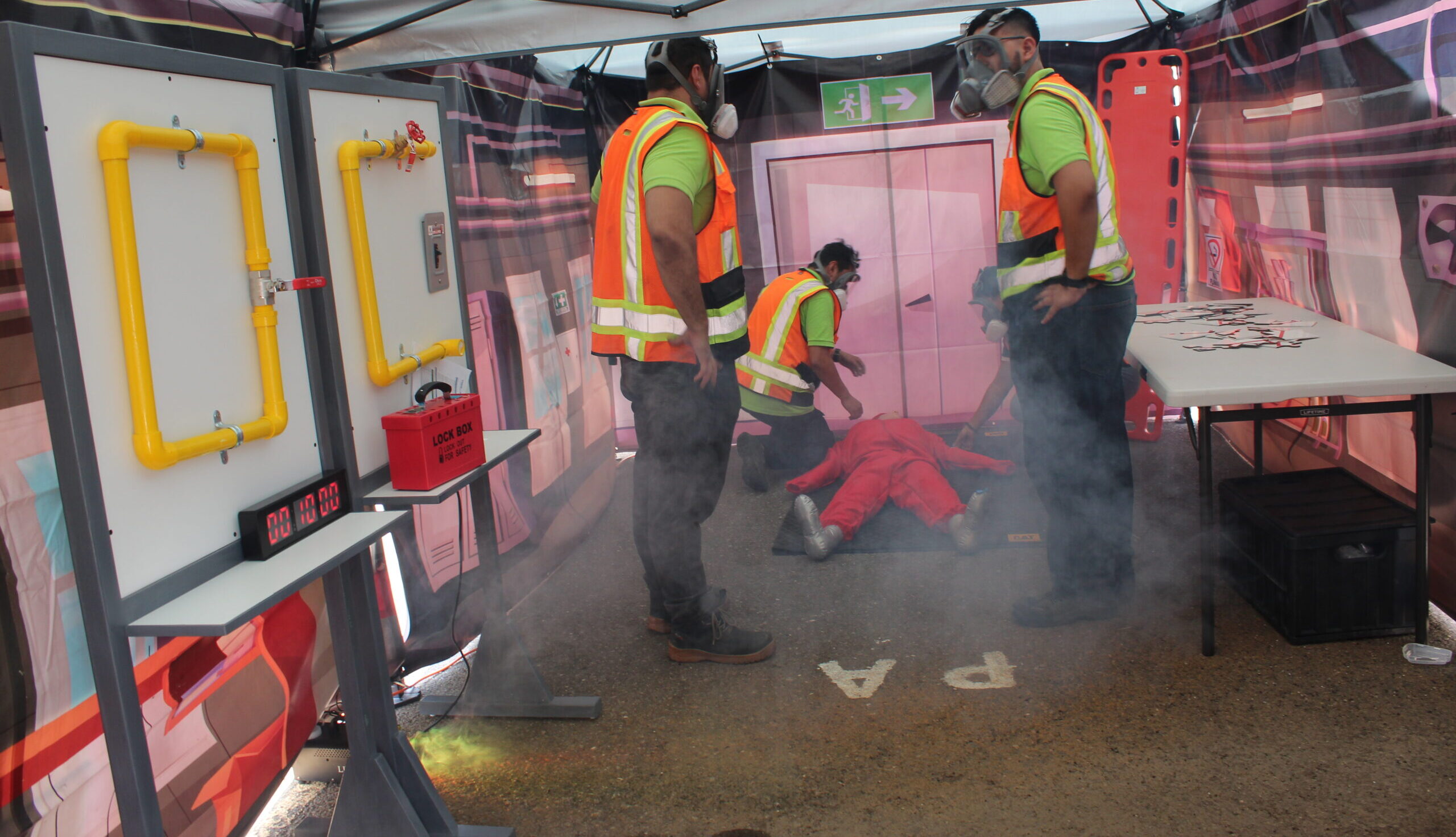
In the escape room, she’s paired with her supervisor and the production manager. They have ten minutes to solve a hazardous energy control procedure and get out. They lose by thirty seconds. The manager laughs at himself and says out loud what Rosa has been thinking for months: the lockout points on her production line aren’t even clearly marked.
For the first time, someone in leadership—someone who makes decisions and allocates resources—has seen what she sees every day.
The exhaustion of hearing “because that’s the rule”
We’ve all experienced it: someone tells us something has to be done a certain way “because it does,” “because the procedure says so,” or “because corporate requires it.” And of course, we comply. But inside, something shuts down.
A rule people don’t understand gets followed while someone is watching. When circumstances change, the person is left on their own, improvising with whatever they think they know. Ergonomic theory explains this clearly: many of the errors we call “human error” begin when people don’t understand why they’re being asked to do something. And behind those errors, there is often something poorly designed—the workstation, the tool, the procedure, or the way the work is organized.
What happened to Rosa at the fair was the opposite. Nobody forced anything on her. She reached the conclusion herself. And when a conclusion is your own, you don’t need someone to monitor you to stand by it.
We should also be honest: no game can fix a jammed machine guard or a production target that can’t be met safely. Telling Rosa to be careful without giving her the tools to do so only adds another burden. Hands-on activities work when the company does its part too.
Rest is part of taking care of ourselves
Something happened that morning that almost nobody records in a report: Rosa got a break.
She didn’t rest by sleeping. She rested by laughing, stepping away from the production line, and taking on a challenge she could win. Work psychology has found that this is exactly what helps the mind recover: putting work aside for a while, relaxing, feeling in control, and taking on a small challenge that can be overcome. Ergonomics has long recognized that the mind gets tired too and needs breaks before fatigue builds up.
Something else stays with people. The coworkers who laughed together that morning may be more comfortable asking one another for help the next time something goes wrong at three in the morning. That bond is called social support, and it is one of the strongest protections people have against work-related stress.
In Mexico, NOM-035-STPS-2018 recognizes this. Among the actions it calls for to create a favorable work environment are encouraging cultural and sports activities, promoting mutual support, bringing managers and workers closer together, and—when employees agree—organizing activities that include their families. Taking care of people’s morale isn’t a luxury. It’s part of the obligation.
How to make sure it leads to more than one good morning
A fair can be just that: a pleasant morning with photos for the bulletin board. Or it can bring about real change. The difference rarely lies in the game itself. It lies in what happens before and after:
- Each activity should reflect the real risks at that plant.
- Managers should play, lose, and laugh alongside their teams.
- Afterward, someone should ask, “Where does this happen here?”—and listen to the answer.
- What people discover through play should lead to a visible improvement on the plant floor.
If, that same week, the manager has the lockout points on Rosa’s line clearly marked, the fair wasn’t just an event. It was the start of something.
Imagine returning to the plant a few months later. The banner is still there, just as spotless as ever. But on the production line, Rosa stops us to show her board with the lockout points marked, “just like in the game.” She says it proudly, and with a little amusement.
Nobody remembers the sign that said, “I touch, I play, I learn.” We remember what we touched, who we laughed with, and what we discovered for ourselves. People aren’t transformed by posters. They’re transformed by experiences. And when a company gives its people experiences like these, it tells them something no banner can: you matter here.
At HF Safety & Environmental, we design and run safety, environmental, and wellness fairs with team games tailored to each plant and its people. Activities include safety escape rooms, hazardous energy control master classes, explosive-atmosphere chambers, workplace yoga, gardening and composting workshops, and family activities. Each activity also generates useful documentation to support compliance with NOM-035.
Frequently asked questions
What are team-building games at a company?
They are group activities with a learning or team-building goal. Employees take part and experience the activity instead of just listening. In industrial settings, these activities help people understand why safety rules matter, give the mind a break, and build trust among coworkers.
Do hands-on activities count toward NOM-035?
They can be part of prevention efforts. The standard calls for cultural, sports, and family integration activities, as well as mutual support between workers and managers. To make them count, document the activities and connect them to your NOM-035 program.
Can a game replace formal training?
No. It complements formal training. Training required under each NOM is still necessary. Games help people understand and remember what they learn.
How often should companies hold these activities?
Consistency matters more than frequency. A single event each year with no follow-up is quickly forgotten. These activities work best as part of a program with clear goals, follow-up conversations, and visible improvements on the plant floor.
Sources
- NOM-035-STPS-2018, Psychosocial Risk Factors at Work—Identification, Analysis, and Prevention. Official Gazette of the Federation, October 23, 2018, sections 4.2, 4.6, and 8.2.
- Burke, M. J.; Sarpy, S. A.; Smith-Crowe, K.; Chan-Serafin, S.; Salvador, R. O.; and Islam, G. “Relative Effectiveness of Worker Safety and Health Training Methods.” American Journal of Public Health, 2006; 96(2):315–324.
- Engelkamp, J. Memory for Actions. Psychology Press, 1998.
- Schein, E. H., and Schein, P. Organizational Culture and Leadership, 5th edition. Wiley, 2017.
- Sonnentag, S., and Fritz, C. “The Recovery Experience Questionnaire: Development and Validation of a Measure for Assessing Recuperation and Unwinding from Work.” Journal of Occupational Health Psychology, 2007; 12(3):204–221.
- Kolb, D. A. Experiential Learning: Experience as the Source of Learning and Development. Prentice Hall, 1984.
- Landsbergis, P. A., et al. “Occupational Health Psychology,” chapter 33 in The Occupational Environment: Its Evaluation, Control, and Management, 3rd edition. AIHA.
- Health and Safety Executive. Reducing Error and Influencing Behavior (HSG48), 2nd edition, 2009.
- Occupational Hygiene Training Association. Ergonomic Essentials, 2023.