Environmental Management

Biodiversity Management

The Risk Already on the Balance Sheet of Companies in El Bajío and Yucatán

Publication Date: July 2026

If you are a CEO, plant director, or compliance officer at an industrial company in El Bajío or the Yucatán Peninsula, biodiversity management is no longer just a sustainability issue. Today, it is a factor that directly impacts financial risk, access to capital, and the continuity of contracts with global clients.

For years, it was treated as a chapter in the annual report. Today, it is a line item that banks, insurers, and international clients review before making decisions. The question is no longer whether the operation is “green.” The question is whether the company has quantified the cost, in terms of capital and contracts, if the ecosystems its process depends on deteriorate or are regulated more severely.

Why this is already in the cash flow and on the board's agenda

The argument is not environmental; it is about the balance sheet. The World Economic Forum estimates that over $44 trillion of global economic value depends moderately or highly on nature and its services. Biodiversity loss could subtract $2.7 trillion annually from global GDP by 2030. In the Global Risks Report 2026, it appears as the second most severe risk over a ten-year horizon.

In Mexico, this risk materializes concretely. In El Bajío, pressure on terrestrial ecosystems is high due to industrial density. In Yucatán, coastal ecosystems, mangroves, and the karst aquifer face increasing tensions from industrial, energy, and infrastructure projects. In both cases, investors and global clients are already measuring how companies manage these dependencies and impacts.

More than 730 organizations managing over $22 trillion in assets have committed to the TNFD framework. GRI 101: Biodiversity 2024 has been in effect since January 2026. Drive Sustainability’s SAQ 5.0, used by major automakers, explicitly includes the section on Biodiversity, land use, and deforestation. A supplier unable to respond with clear information and concrete actions loses competitiveness.

Mexican Regulatory Compliance: What Local Regulations Already Demand

mexican regulatory compliance in biodiversity

In addition to international frameworks, companies operating in Mexico must comply with national regulations. The main instruments are:

  • General Wildlife Law. Legal framework regulating the conservation and sustainable use of wildlife and its habitat. It establishes prohibitions on damage or disturbance and empowers the Federation to identify species at risk.
  • NOM-059-SEMARNAT-2010. Classifies native species into risk categories (Probably Extinct, Endangered, Threatened, and Subject to Special Protection). It is mandatory and must be considered in any project that may affect listed species or their habitats.
  • Environmental Impact Assessment (MIA). Projects with potential significant impact on biodiversity must undergo assessment by SEMARNAT. NOM-059 serves as a reference for identifying species at risk within the project’s area of influence.

For companies already ISO 14001 certified, biodiversity management can be integrated into the existing environmental management system, strengthening the analysis of aspects and impacts.

How to build a strategy that truly protects the balance sheet

The method that distinguishes a prepared company from an exposed one is not the quantity of metrics, but the sequence of its actions. Below is an approach aligned with ISO 17298:2025 and current Mexican regulations:

1. Define scope and context

Determine the scope of the approach and identify obligations derived from NOM-059 and the General Wildlife Law.

2. Identify and prioritize impacts, dependencies, risks, and opportunities

Assess financial and operational materiality, considering species at risk according to NOM-059 and the priority ecosystems of each region.

3. Define ambition, objectives, and action plan

Establish clear goals applying the Mitigation Hierarchy (Avoid, Minimize, Restore, Offset).

4. Establish ESG indicators and monitoring system

Define state, pressure, and response indicators with baseline and targets.

5. Implement, monitor, and continuously improve

Execute the plan and systematically review progress.

6. Communicate and report in an integrated manner

Generate reports that respond to both national regulators and international clients and investors.

What CDP, SAQ 5.0, TNFD, and GRI 101 really ask – and how to respond with high value

The main frameworks and questionnaires used by your clients and investors share similar questions. Below is what evidence is expected and how a high-value response differs:

A company that consistently achieves the “High Value” level generates greater trust among clients and investors, both in El Bajío and Yucatán.

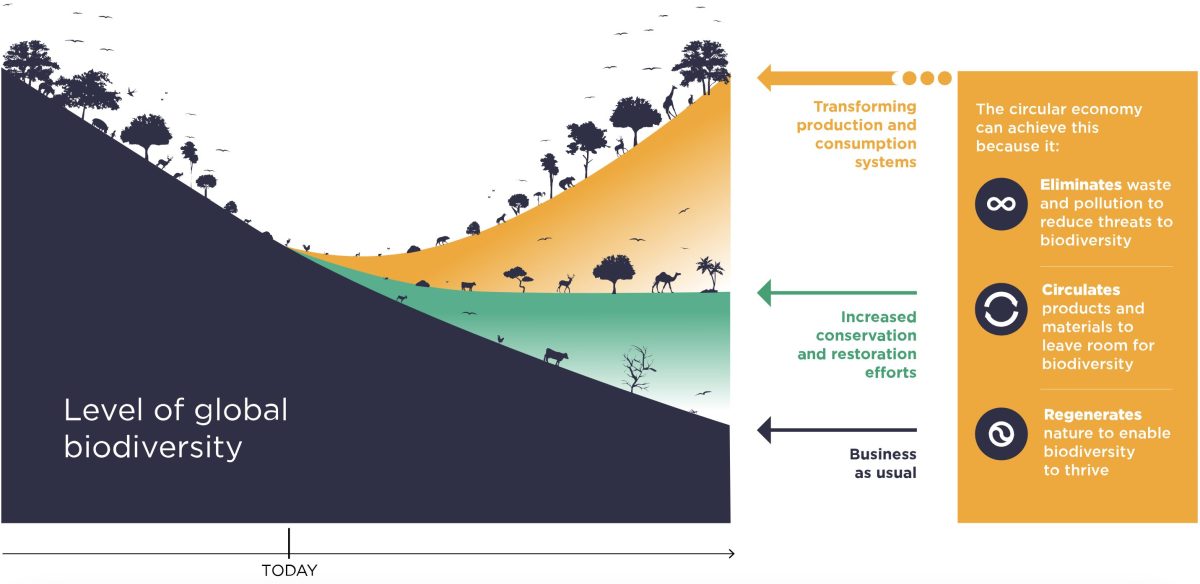
The Strategic Opportunity: Biodiversity and Circular Economy

Comparative chart of ESG reporting standards and IFRS sustainability standards — Source InvestESG
Source and graphic credits: InvestESG.eu

ISO 17298:2025 provides the structured framework for managing this professionally. The circular economy offers the transformative approach that allows moving from mitigating harm to generating regenerative value.

How HF Safety helps you implement this with rigor and efficiency

At HF Safety & Environmental Services, we apply a methodology aligned with
ISO 17298:2025 that works for operations in both El Bajío and Yucatán

Diagnosis and prioritization of impacts and dependencies adapted to the ecosystem context of each region and to NOM-059.

Definition of ambition, objectives, and ESG indicators aligned with CDP, SAQ 5.0, TNFD, and GRI 101.

Design of the annual monitoring system.

Preparation of the integrated report that builds trust with clients and investors

Integration with your existing management systems (ISO 14001, compliance, risk management) and with SEMARNAT requirements.

Our goal is for you to have a professional, measurable corporate biodiversity strategy that truly closes the loop: from diagnosis to the report your stakeholders need.

The next step that defines your position

Biodiversity is no longer the ‘nice’ chapter in sustainability reports. It is the operational fitness of the business and, increasingly, a condition for accessing capital and export contracts.

The company that reads it as a balance sheet risk decides today where to invest. The one that leaves it only in the report lets the regulator, the ecosystem, or the client decide for it.

Do you want to take the next step with clarity and professionalism?

At HF Safety, we can support you with a focused initial diagnosis and a concrete proposal to build or strengthen your corporate biodiversity strategy, considering both international frameworks and current Mexican regulations.

BIODIVERSITY STRATEGY

PROTECT YOUR VALUE AND ACCESS TO CAPITAL

Biodiversity is no longer a 'nice' chapter in your reports; today it is a critical variable in your balance sheet, supply chain, and reputation.

At HF Safety & Environmental Services, we integrate global standards with the rigor of Mexican regulation to safeguard your operation:

Material Dependency Diagnosis

We identify which nature services are critical for your process, under TNFD and ISO standards.

Regulatory Alignment

We ensure your compliance with NOM-059 and SEMARNAT, facilitating your path through environmental impact processes.

High-Value Reporting

We structure your information to successfully respond to CDP, SAQ 5.0, and GRI 101, generating investor confidence.

References

  • CDP. (2026). CDP corporate questionnaire 2026. https://www.cdp.net/en/disclose/question-bank
  • Drive Sustainability. (2023). Sustainability Assessment Questionnaire (SAQ) 5.0. NQC Ltd. https://supplierassurance.com/saq
  • Ellen MacArthur Foundation. (2021). The nature imperative: How the circular economy tackles biodiversity loss. https://ellenmacarthurfoundation.org/topics/biodiversity/overview
  • European Financial Reporting Advisory Group. (2023). European Sustainability Reporting Standards (ESRS) E4 – Biodiversity and ecosystems. https://www.efrag.org/
  • World Economic Forum. (2024). Nature risk rising: Why the crisis engulfing nature matters for business and the economy. https://www.weforum.org/publications/nature-risk-rising-why-the-crisis-engulfing-nature-matters-for-business-and-the-economy/
  • World Economic Forum. (2026). The global risks report 2026. https://www.weforum.org/publications/global-risks-report-2026/
  • Global Reporting Initiative. (2024). GRI 101: Biodiversity 2024. https://www.globalreporting.org/standards/
  • International Organization for Standardization. (2025). ISO 17298:2025 Biodiversity — Considering biodiversity in the strategy and operations of organizations — Requirements and guidelines. ISO.
  • IUCN. (n.d.). Mitigation hierarchy. https://www.iucn.org/
  • Secretariat of Environment and Natural Resources. (2010, December 30). Official Mexican Standard NOM-059-SEMARNAT-2010, Environmental protection-Native species of Mexican flora and wild fauna-Risk categories and specifications for their inclusion, exclusion or change-List of species at risk. Official Gazette of the Federation. https://dof.gob.mx/nota_detalle.php?codigo=5578808&fecha=30/12/2010
  • Taskforce on Nature-related Financial Disclosures. (2023). Recommendations of the Taskforce on Nature-related Financial Disclosures. https://tnfd.global/
  • United Nations. (2022). Kunming-Montreal Global Biodiversity Framework. Convention on Biological Diversity. https://www.cbd.int/gbf/